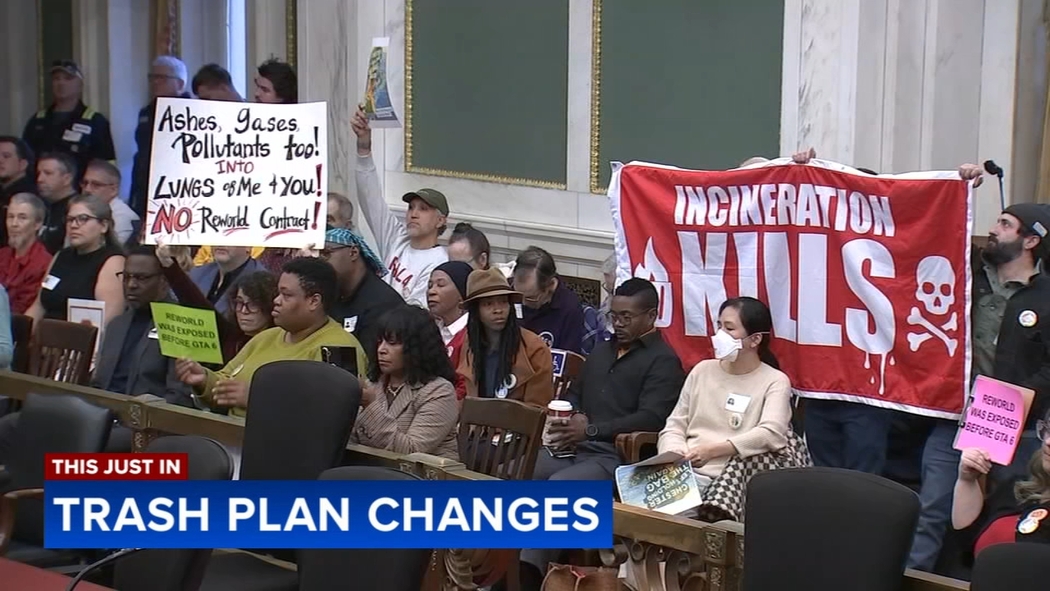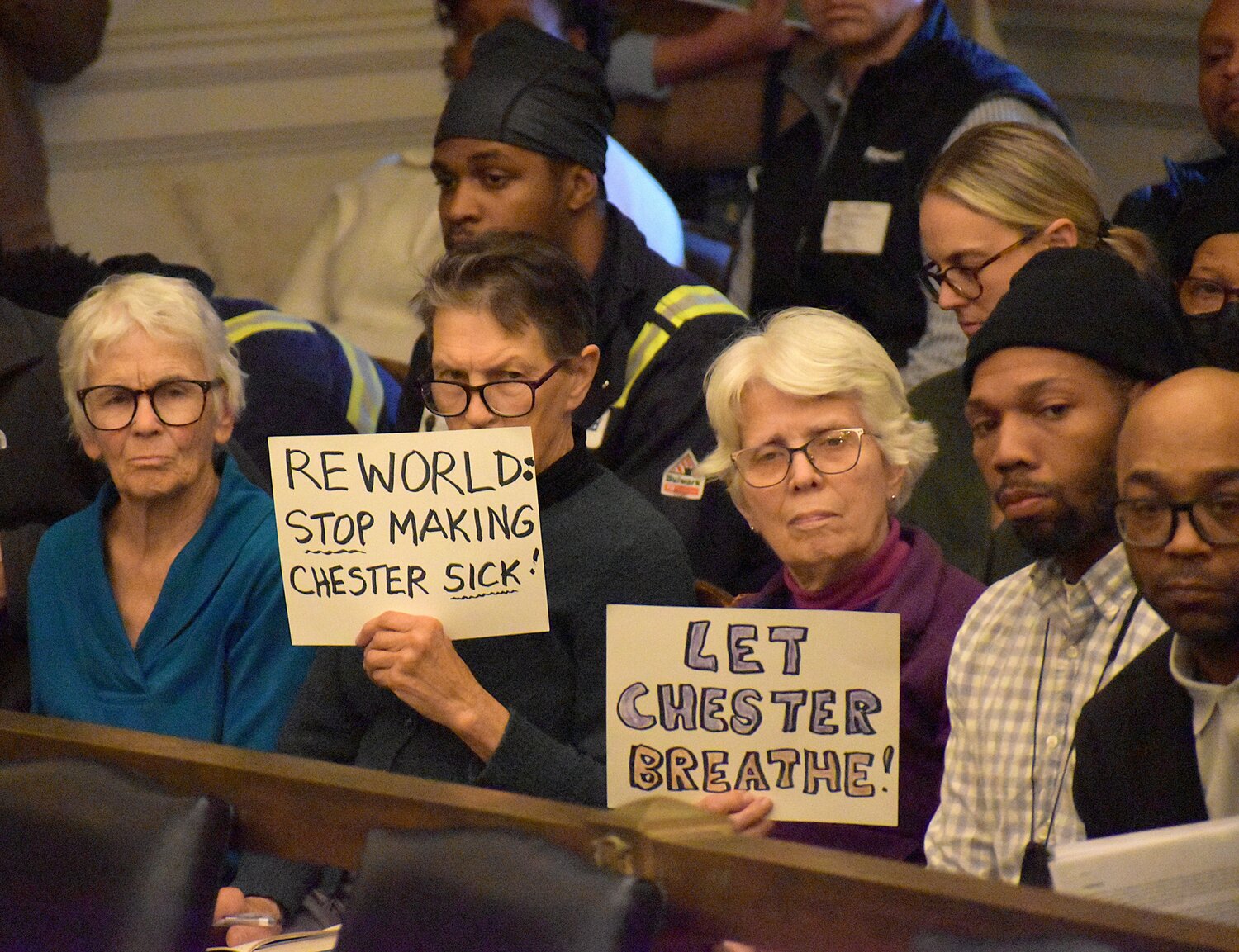
On Monday, November 17, the Philadelphia City Council Committee on Environment voted to advance The Stop Trashing Our Air Act to a full City Council vote. The bill was introduced in September by Council member Jamie Gauthier (D- District 3), who championed the legislation, stating: “Right now is our chance to chart a healthier, cleaner, and greener path.”
The Stop Trashing Our Act would prevent Philadelphia from sending its trash to the Reworld (formerly Covanta) Delaware Valley facility in neighboring Chester, Pennsylvania. Reworld Delaware Valley collects waste from municipalities across Pennsylvania, New York, New Jersey, and parts of Maryland. It is the largest incinerator in the United States.
What is Waste-to-Energy?
The Reworld facility is often-times referred to as a Waste-to-Energy (WtE) plant because Reworld incinerates waste and uses the steam to generate energy. Reworld’s website states that the Delaware Valley facility “generates enough electricity to power roughly 54,000 homes annually and recycles enough metal to build nearly 49,000 cars.” Proponents of WtE proclaim that the process creates a form of renewable energy. However, public health advocates, environmental groups, and fenceline community members expressed concerns about increased cancer rates and health problems associated with toxic air emissions from the incineration process.
A History of Violations
Reworld has a well-publicized history of name changes and controversy. The company began in 1939 as Ogden Corporation and opened its first WtE plant in 1986. In 2001, the company changed its name to Covanta Energy Corporation. The following year, Covanta would file for Chapter 11 Bankruptcy. After multiple lawsuits for bad business deals, pollution violations, and workplace discrimination, the company was sold in 2021 to Swedish-based EQT Infrastructure.
In 2024, Covanta underwent a major re-brand, changing its name to Reworld. In a statement on the company website, Reworld President and CEO, Azeez Mohommed, said, “Our transformation into Reworld™ is an authentic declaration of the impactful strides we have made in sustainability and a commitment to re-imagine the future of waste management.” Reworld’s Delaware Valley location page emphasizes the company’s growing commitment to Environmental Justice, stating, “..our operations in Chester have helped us to understand the importance of a comprehensive Environmental Justice strategy and how to effectively interact with communities.”

The company page mentions the Environmental Justice Policy it issued in 2011 under its former name, Covanta, which commits to meaningful community engagement and equal employment opportunities. The company also pledged to reduce discharges and minimize emissions from its facilities, limit potential impacts from its operations, and account for cumulative impacts. Unfortunately, since the policy’s enactment, Reworld has faced multiple lawsuits and ongoing allegations from residents regarding air and environmental code violations that are in direct opposition to its own guidance.
Former Employees have turned into Whistleblowers
In April 2024, Eric Bazis, a former Reworld Delaware Valley Operations Supervisor, filed a wrongful termination lawsuit against the company. Bazis alleges he was fired after he refused an order from the Reworld Environmental Team to change and falsify measurements of the pH level of ash byproduct and lower the recorded amount of sulfur dioxide. The case is currently under review by the Court of Common Pleas for Delaware County, Pennsylvania.
Other whistleblowers have faced similar litigation battles to Bazis. In 2013, Patrick Fahey, a former maintenance worker at the Covanta Hempstead Incinerator in Long Island, New York, sued the company, alleging the company was illegally sending toxic ash from the incinerator to the Brookhaven Landfill, located in a predominantly Black and Brown community with the lowest life expectancy rate in New York State. In 2024, the city of Brookhaven settled with Reworld for $1 million. This was in opposition to concerns from Fahey and local community groups, such as the Brookhaven Landfill Action and Remediation Group. Community advocates argued that the city’s decision was made without community input and would absolve Reworld of paying for future pollution remediation and cleanups related to the case.
Cleaner Alternatives

Opponents of WtE argue that contracts with incinerator companies often lock municipalities into long-term agreements with quota systems that mandate a set payment regardless of whether that amount of trash is delivered to the site. These agreements can increase energy costs for consumers and municipalities. In 2011, the city of Harrisburg, Pennsylvania went bankrupt after a contract with an incinerator company left the city with $280 million dollars in debt.
Th hindering a just transition to zero-waste strategies. In 2011 an incinerator in Harrisburg, Pen
, which states that the energy generated by WtE incineration can also be produced from landfill waste. Reworld competitor WM (formerly Waste Management) promotes its renewable energy portfolio, which includes converting landfill waste into energy. WM also uses its vast catalog of closed landfill sites to host solar panels. One example is the Annapolis Solar Park, which sits atop an 80-acre closed WM landfill in Annapolis, Maryland. The park houses over 50,000 solar panels that provide 12% of the city of Annapolis’ electricity.
Environmental and public health groups caution that although landfills have negative health consequences, incineration is worse for the environment, public health, and costs. A 2023 study commissioned by the Delaware County Office of Sustainability found that health costs are 23 times higher for the county when waste is incinerated rather than landfilled.

Community Impact
Chester Residents Concerned for Quality of Life (CRCQL) has been leading the call to shut down the trash incinerator and other polluting industries in Chester for over three decades. The organization was founded in 1992 by community residents of the small industrial town located less than 20 miles outside Philadelphia.

“As the people who live in Chester, we are environmentally assaulted every day” – Zulene Mayfield
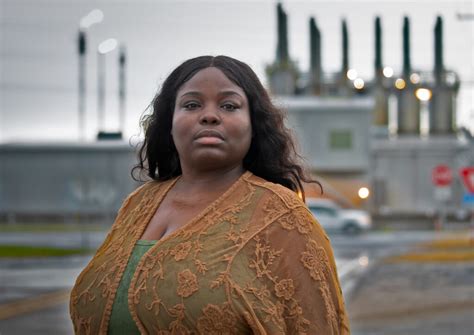
Zulene Mayfield, Chairperson of Chester Residents Concerned for Quality of Living (CRCQL), spoke before the Committee and highlighted the personal impact of burying family, friends, and community members who died from diseases linked to toxins from industrial pollutants.
Mayfield reflected on Joshua Shockley, a 38-year-old father and member of CRCQL who lost his life to cancer in July of 2025. CRCQL honored Shockley and other community members affected by cancer at its annual They Matter event in Chester. A recap of this year’s event noted that Shockley hosted the 2023 festivities in honor of his mother, who also passed away from cancer.
The University of Pennsylvania Center for Excellence in Environmental Toxicology notes that Chester has among the highest age-adjusted mortality and incidence rates for leukemia and cancers of the prostate, lung, and trachea. The city is also reported to have the highest infant mortality rate in Pennsylvania and twice the rate of asthma at the state level. Life-long residents of Chester, Pennsylvania, Nolane L. Fontaine and Margaret Brown testified at the hearing and spoke of the daily impacts of living near the incinerator. Brown mentioned the constant noise pollution caused by the facility.
Residents living near other Reworld incinerators have had similar experiences. In 2019, local news in Conshohocken, Pennsylvania, reported on loud noises and harsh chemical smells emanating from the Conshohocken (Plymouth Township) Reworld plant. ABC 6 News in Philadelphia interviewed residents who said it “Sounded like a war zone.” The company would later apologize to the city, blaming mechanical problems at the site.
Fontaine is the coordinator of CHOICES- a youth environmental justice group sponsored by CRCQL. He noted that more than half of the group suffers from asthma or other respiratory illnesses. However, he uplifted the creativity and tenacity of the youth of Chester. He highlighted how CHOICES members are using their talents to raise awareness of environmental issues in their communities.

Chester houses 11 industrial facilities that emit a host of known cancer-causing chemicals, including benzene, methane, and formaldehyde. Community residents are also pushing back against a Liquified Natural Gas (LNG) Export facility proposed for the region. A Storymap developed by CRCQL and WE ACT for Environmental Justice explores the cumulative impacts of confronting multiple polluting industries simultaneously.
The Philadelphia Sanitation Department Has Concerns
If the bill passes, Philadelphia will end its contract with Reworld and transition to using solely landfills for municipal waste disposal. Carlton Williams, Director of Clean and Green Philadelphia testified on behalf of this city’s sanitation and beautification agency. Williams called for a delay in a final vote until the City completes a bidding process for a new sanitation contract. Williams stated that the city currently sends its waste to WM-owned landfills in Bucks County, PA, and the Reworld incinerator in Chester. Philadelphia’s contracts with WM and Reworld are set to expire on June 30, 2026.
Williams urged the City Council to acquire more data before voting on the order and to consider alternatives beyond traditional waste disposal. He encouraged the city to review more sustainable, cost-effective waste-disposal options used by other major cities. Williams highlighted the City of Chicago’s investments in developing large-scale composting strategies.
Philadelphia Sanitation Commissioner Crystal Jacobs Shipman noted that the city needed to attract more sustainable waste removal options, as area landfills were almost at capacity. Shipman also indicated that Philadelphia has to compete with neighboring New Jersey and New York for landfill space. She further stated that ending the existing incineration contract with ReWorld could increase household waste disposal costs by 12%.
In September, the County Council of Delaware County, where Chester is located, adopted a vigorous zero-waste plan that reduces the County’s reliance on incineration and landfills.

The Zero Waste Hierachy referenced in the Delaware County Zero Waste Plan. Read the full document here.
What’s the Next Step?
The Philadelphia City Council is scheduled to vote on the bill in December. The city is also reviewing its current waste management plan and accepting applicants for new waste disposal contracts. CRCQL is calling on elected officials in Pennsylvania, New York, New Jersey, and Maryland to also end their contracts with Reworld and help close the largest incinerator in the United States of America.
Watch the full City Council Committee hearing below or at this link: https://www.youtube.com/watch?v=jznk8bARW6s